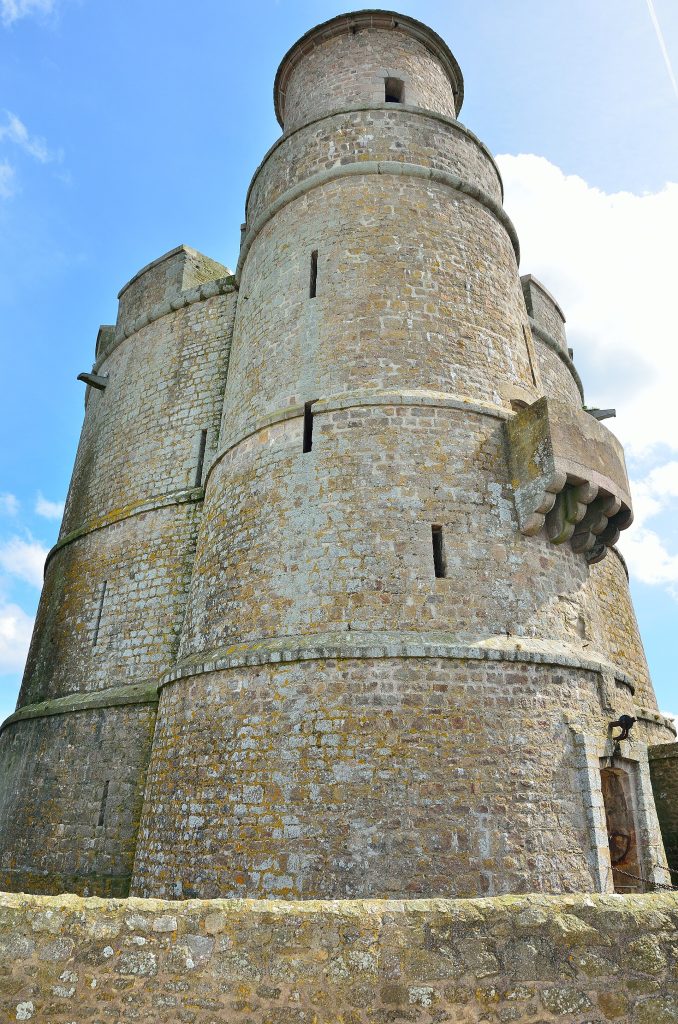
Just 20 minutes from the château, on the north-eastern tip of the Cotentin Peninsula, Saint-Vaast-la-Hougue is one of the most beguiling small towns in Normandy. In 2019 it was voted France’s favourite village — and once you’ve strolled its granite quayside, eaten an oyster straight from the water and crossed to the wild little island of Tatihou, it is not hard to see why.
The Town
Saint-Vaast is a working harbour — the third largest fishing port on the English Channel — and it wears that identity with quiet pride. The stone quayside is lined with fishing boats, oyster shacks, a handful of excellent restaurants and a Wednesday and Saturday market where you can buy fresh oysters, local cheeses, artisanal cider and vegetables straight from Val de Saire farms. On Saturday mornings in particular, the market has a wonderful, unhurried atmosphere.
The Oysters
Saint-Vaast is perhaps the most famous oyster address in Normandy, and the oysters here have a justified reputation. The bay has been cultivated since 1880 and is the oldest oyster basin in La Manche. Today around 250 hectares of shallow tidal waters are given over to oyster beds, and the water quality has been certified excellent by the regional health authority — which is reflected in the clean, faintly iodine flavour of a Saint-Vaast oyster. Several producers sell directly from the port, and at low tide the oyster beds themselves form a visible causeway stretching out towards Tatihou Island.
History: The Battle of La Hougue, 1692
The two towers that stand sentinel over the bay — one on La Hougue, one on Tatihou Island — tell a story of catastrophic military defeat. In May 1692, during the Nine Years’ War, a French fleet attempted to escort the exiled King James II back to England to reclaim his throne. A combined English and Dutch fleet intercepted them at Barfleur, won a decisive battle, then pursued the damaged French ships south. Twelve French ships of the line were driven ashore and burned in the bay of Saint-Vaast. It was a humiliation for Louis XIV and a disaster for French naval ambitions in the Channel.
The response was characteristically French: the great military engineer Sébastien Le Prestre de Vauban was dispatched to fortify the coast. He built the towers at La Hougue and Tatihou, and the entire ensemble — part of his network of coastal fortifications — was inscribed as a UNESCO World Heritage Site in 2008.
Tatihou Island
Tatihou is a small island — barely 29 hectares — that sits just 1.2 km offshore, reached by one of the most unusual ferry services in France. The Tatihou III is an amphibious craft: at high tide it sails through the water using its propeller; when the tide drops, it switches to wheels and drives along the seabed. The crossing takes just a few minutes and is a delight in itself. It is also possible to walk across the oyster beds to the island at low tide, though tide tables should be checked carefully.
Once on the island, there is more to explore than its modest size might suggest.
The Vauban Tower
The round tower built by Vauban in the aftermath of the 1692 battle stands 21 metres tall and 20 metres wide. It is a striking piece of military architecture — solid, purposeful and beautifully proportioned — and one of the best-preserved examples of Vauban’s coastal fortifications.
The Maritime Museum
Housed in the island’s former lazaretto (a quarantine building), the Maritime Museum holds one of the most compelling collections on the Normandy coast. Its centrepiece is the archaeological material recovered from the wrecks of the 12 French ships sunk here in 1692 — personal objects, weapons, navigational instruments, and the mundane detritus of life at sea that makes history feel immediate. Behind the museum, a large boat hangar houses around 30 traditional fishing and sailing vessels, documenting the maritime history of the Manche coast from the inside out.
The Botanical Garden
The gardens at Tatihou are a surprise: diverse, thoughtfully planted and unexpectedly rich. They are divided into three distinct areas — the Jardin des Découvertes (an 800 m² botanical garden), the Grand Jardin Maritime (three hectares of coastal planting), and the Jardin d’Acclimatation, filled with exotic plants from the southern hemisphere that thrive in the mild maritime microclimate.
The Bird Reserve
Three hectares of the island have been a protected bird reserve since 1990. Over 150 species pass through or nest here across the seasons, making Tatihou one of the best birdwatching spots on the Cotentin. The island’s isolation and relative quiet make it particularly rewarding in spring and autumn migration periods.
Staying on the Island
For those who want to go further, Les Maisons de Tatihou offers accommodation and a restaurant on the island itself. Spending a night on Tatihou — watching the tide come and go, with the mainland lights visible across the water — is a genuinely unusual experience.
Les Traversées Tatihou — Festival of Sea Music
Every August, Tatihou hosts one of Normandy’s most distinctive festivals. Les Traversées Tatihou is a festival of musiques du large — music from seafaring cultures around the world: folk, world, maritime, traditional. The format is inseparable from the place: audiences cross to the island at low tide, attend concerts in the open air and in the old fortifications, then return to Saint-Vaast at high tide. In 2026 the festival runs from 12 to 16 August, its 32nd edition.
Practical Information
Getting there: Saint-Vaast-la-Hougue is approximately 20 km from the château — about 20 minutes by car via the D902.
Tatihou crossing (amphibious boat): Adults €14 · Children 3–18 €6.50 · Under 3 free
Island open: 29 March to 11 November · 10am–6pm (until 7pm July and August)
Book crossing & visit: tatihou.manche.fr
Market: Wednesday and Saturday mornings in the village centre
Les Traversées Tatihou 2026: 12–16 August · traversees-tatihou.manche.fr